Relocating to a new city always comes with a learning curve. But when it comes to moving to Washington DC, even people who have done all the research tend to say the same thing:
“I didn’t expect it to feel this complicated.”
It’s not because they’re unprepared.
And it’s not because they can’t make decisions.
It’s because DC doesn’t behave the way people expect it to.
Why it feels harder than it should
On paper, it looks simple.
You search for the best neighborhoods in DC.
You look up walkability.
You read about where people live.
And you get very clear answers.
But once you start digging in—or actually spending time here—it starts to feel less obvious.
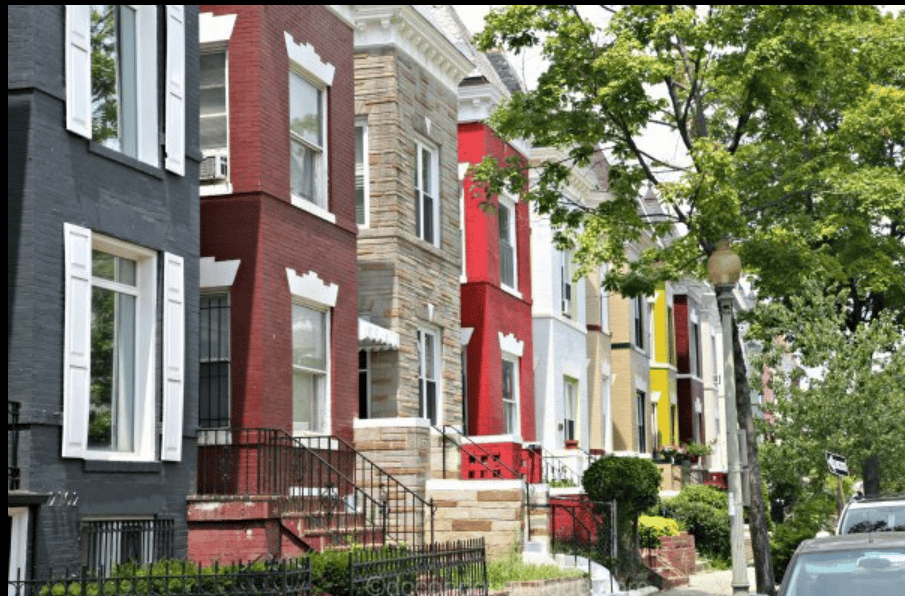
Because in DC, one block can change everything.
“Walkable” doesn’t mean the same thing from one neighborhood to the next.
And the feel of a place matters just as much as anything you can measure.
Two areas at the same price point can offer completely different day-to-day lives.
That’s usually the moment where things start to feel overwhelming.
What people are actually trying to figure out
Most buyers think they’re searching for the right features.
What they’re really trying to understand is how their life is going to feel once they’re here.
When someone says they want something walkable, they’re usually saying:
They don’t want to rely on their car every day.
They want life to feel easy.
They want to feel connected to their surroundings quickly.
When someone says they want a good investment, it’s rarely just about numbers.
They’re trying to avoid making a mistake.
They want flexibility if plans change.
They want to feel confident they made the right call.
Those aren’t filters. They’re lifestyle decisions.
Why neighborhoods matter more than people expect
One of the biggest shifts for people relocating to DC is realizing that neighborhoods aren’t interchangeable.
They solve for different things.
Some areas feel energetic, dense, and constantly in motion.
Others feel quieter, more residential, and a little removed.
Some make daily life feel seamless.
Others offer more space or longer-term upside.
There isn’t a universally “best” neighborhood.
There’s just the one that fits how you want to live.
What online research misses
Most people relocating to DC start with rankings, lists, and data—and that makes sense.
Those tools can tell you about price, walk scores, and schools.
What they can’t tell you is how a place actually feels.
They can’t show you what a street is like on a weekday morning.
Or where people naturally spend their time.
Or which areas feel intuitive versus slightly disconnected.
Those are the details that shape your daily life.
And in DC, they matter more than people expect.
A simpler way to approach it
If the process feels overwhelming, it’s usually not because you’re doing anything wrong.
It’s because you’re trying to make a lifestyle decision using surface-level information.
A better place to start is with a different set of questions.
How do you want your day-to-day life to feel?
What does convenience actually look like for you?
What trade-offs are you comfortable making?
Once you have clarity on that, the right neighborhoods start to become much more obvious.
Final thoughts
Moving to Washington DC doesn’t have to feel overwhelming—but it often does at the beginning.
Not because it’s overly complicated.
Because it requires more context than most cities.
Once you move past rankings and start focusing on how you actually want to live, the process becomes much clearer.
That’s where I spend most of my time with clients—helping them move from uncertainty to clarity.
If you’re thinking about relocating to DC, now or down the line, I’m always happy to help you think it through in a way that actually makes sense.